Blog
Becoming Choice Architects: The Power of the Nudge in Policy Making (2025)
P.G. Babu, Roopa Madhav, Avi Singh Majithia
What began as a guide to healthy eating- the USDA’s iconic food pyramid- ended up only confusing the people it was trying to help. The U.S. Department of Agriculture (USDA) created it in 1992, dividing it into six sections containing information about the types of foods the average American should be consuming per day. Even after the USDA updated it in 2005, the average American continued to find it largely incomprehensible in helping decide how to create a balanced meal.
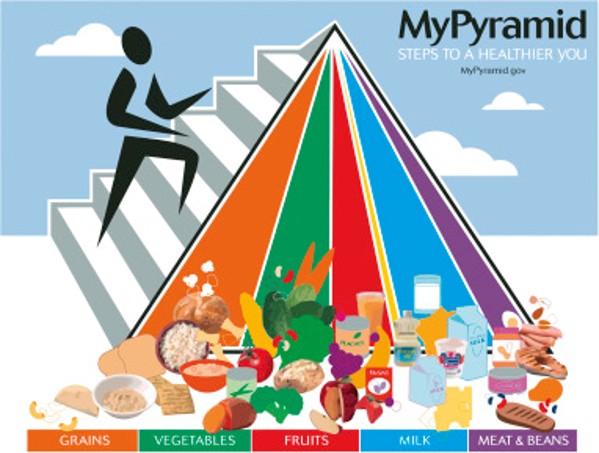 The USDA Food Pyramid (2005)
Cass Sunstein, a notable economist working with the government at the time said that the solution was an easier graphic, that helped parents understand the elements of a balanced diet better and would require lesser mental effort to interpret. This introduced MyPlate.
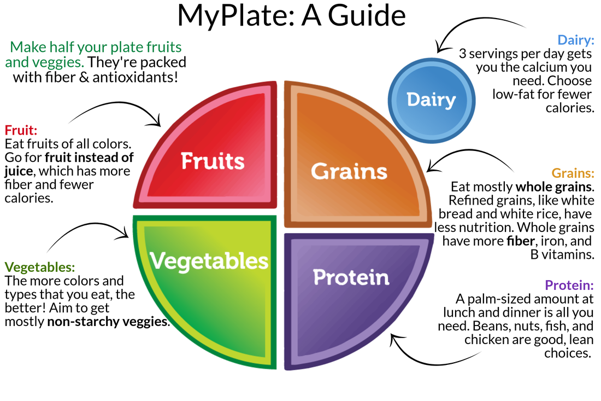 USDA MyPlate Graphic
According to Sunstein, one of the authors (with Richard Thaler) of Nudge, a book on choice architecture and behavioural economics, changing this graphic was not a minor detail. For government policy and regulations to be effective, policymakers must present them in an easy-to-understand manner.
Nudges are a part of behavioural economics tools, that combines psychology and economics to better understand, how and why people behave the way they do. At its core, behavioural economics seeks to understand how real people actually behave, and then to design policies that align with those real-world tendencies.
Policymakers craft behavioural change through three means- coercion, inducements and nudges. A nudge is any small change to the choice architecture—the context in which people make decisions—that predictably alters behaviour without forbidding options or significantly changing economic incentives.
Nudges do not limit or eliminate options. Instead, they encourage behavioural change by making good decisions more attractive or easier to make. Nudges are often simple changes or rules – making new policy sign-ups easier by using simplified forms, changing the default rules to automatically opt-in (automatic enrolment, for example) and using social norm prompts to highlight compliance by one’s peers.
Since the launch of the UK’s Nudge Unit in 2010 and the US Social and Behavioural Sciences Team shortly thereafter, governments worldwide have incorporated behavioural tools into their policy toolkits. In India as well, the NITI Aayog established the Behavioural Insights Unit (BIU) in 2019. State BIUs set up in Bihar and Uttar Pradesh conducted on-ground research and tested behaviourally designed interventions.
Currently, in collaboration with development partners, authorities are applying behavioural insights to boost the Aspirational Districts Programme (ADP) in India. Launched in 2018, the programme focuses on boosting growth across 5 verticals (health and nutrition, financial inclusion, skill development, agriculture and water resources, and basic infrastructure) in 112 districts across India.
Nudges have known benefits—they provide a low-cost model to effect change and often signal to influence behaviour (advertisement on social norms, for example). They also have the potential for very high cost-benefit ratios, as in the case of the switch to MyPlate from the Food Pyramid. And despite wanting to influence behaviour, nudges maintain the freedom of choice. They present options but do not force them upon the individual citizen.
In Indian policy as well, we have multiple examples of nudges being used effectively. Within government programs, authorities have used behavioural insights and associated nudges in high-profile schemes such as the Swachh Bharat Mission, which focuses on eliminating open defecation through community-monitoring dashboards, public pledges and advertisements reinforcing new social norms. The ‘Give It Up’ LPG campaign also utilized social norm prompts and default rules to influence behaviour. Above-poverty-line consumers received a simple prompt asking them to give up their LPG subsidies that would give BPL households a gas connection. This led to 10 million sign-ups by people giving up their LPG subsidy.
Adopting nudge policies at the grassroots level then, has the potential to enable faster responses to behavioural nudges, conduct real-time analysis of effected change, and design more responsive policies. The existing ADP framework can support this, to influence and bring out positive change in farming practices. To start with, Krishi Vigyan Kendras (KVKs) should staff officers trained to spot local biases and design pilots.
Authorities can push policy initiatives through social norm prompts to improve adoption and compliance. For example, to push greater adoption of eNAM (National Agriculture Market) to boost revenue, we should utilize messaging in the form of bulletin boards or SMSs. A message like - “Last season, 70% of your village sold through eNAM and earned ₹2,500 more on average.” - will boost sign-ups.
Nudge policies at the local and decentralised level are necessary and should be guided by the following key principles:
- Choice architects need to understand the biases that impact their target population. For example, financial inclusion schemes need to understand the biases that exist around female financial literacy.
- Choice architects need to understand that the nudge policies make assumptions about the social preferences. A baseline understanding of local preferences at the local level is easier to obtain and targeting populations at the local level is easier. For instance, public health nudges at the local level are easier to identify based on local populations and their regular health goals.
- Gathering data at the local level is easier than at a national scale. Designing nudges at the local level will be less time consuming than at the national scale.
- Understanding of local conditions can also benefit in tailoring better nudge policies, such as climate change mitigation and adaptation measure.
Having said that, overwhelmingly, nudges show positive policy impacts. Behavioural economics, on a whole, offers India a time-tested framework to refine policy at every level. From national- level schemes to block-level services, nudges can bridge the gap between good intentions and on-ground action.